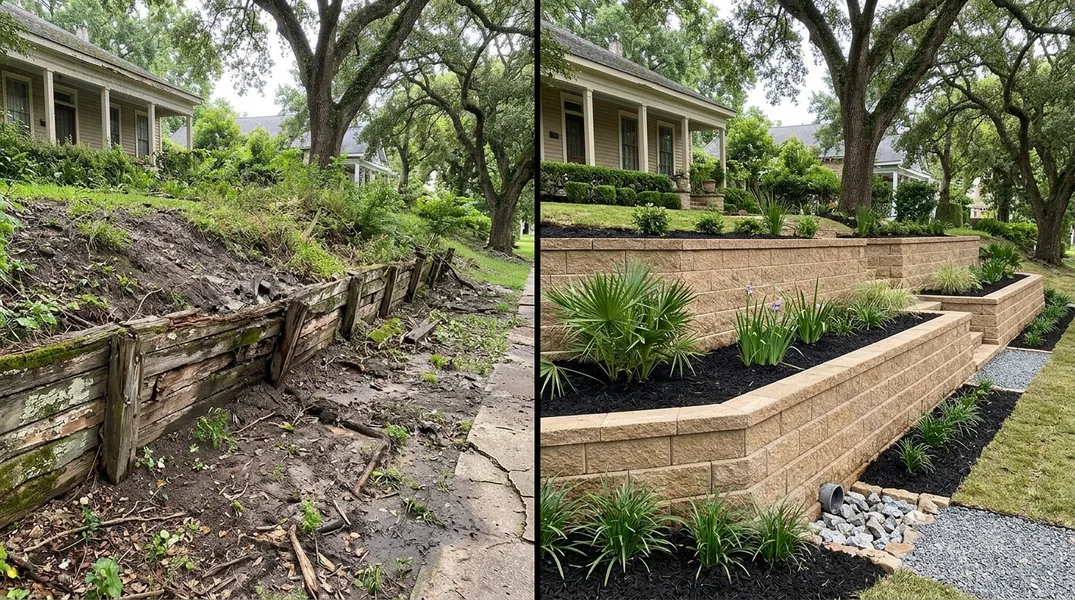
Why Retaining Walls Lean in New Orleans' Shifting Soil
If you own a home in New Orleans, you already know the ground beneath your feet is not as stable as it looks. The city sits on layers of clay, silt, and organic matter that expand when wet and shrink when dry. That constant cycle of swelling and contracting puts steady pressure on any retaining wall, and over time even a well-built wall can start to lean, bow, or crack.
Leaning is not just a cosmetic problem. A wall that tilts outward is telling you that the soil behind it is moving, that water is not draining properly, or that the original footing was not deep enough for the conditions. In a place like Metairie, where the water table stays high and heavy rain is routine, these forces work on a wall every single season. The question is not whether the wall will move, but how much movement you can safely tolerate before it becomes a hazard.
Leaning Retaining Wall Repair: When It Is Still the Right Call
Not every lean means the wall is doomed. If the movement is minor, recent, and limited to a small section, Retaining Wall Repair can often stabilize the structure and restore its function at a fraction of the cost of a full rebuild. A professional assessment will look at how far the wall has moved, whether the footing is still intact, and whether the drainage behind the wall can be corrected. In many cases, the fix involves relieving the soil pressure, improving drainage with proper backfill and weep holes, and reinforcing the wall so it stops moving.
Crack repair is a big part of this decision. Hairline cracks in a concrete wall are common and usually manageable. Wider cracks, especially ones that run diagonally or widen over time, suggest the wall is under stress and may need more than a patch. The key is to catch the problem early. A wall that has leaned an inch in ten years is a very different situation from one that has leaned three inches in a single season. If you are seeing movement and want a straight answer about whether repair is viable, a free estimate from a local specialist is the fastest way to know.
Retaining Wall Replacement: When Repair Is Throwing Money Away
Sometimes the honest answer is that the wall has reached the end of its useful life. If the footing has failed, if the wall is leaning significantly and continues to move despite repairs, or if the original construction was never adequate for the soil conditions, patching it will only buy you a little time. Retaining Wall Replacement becomes the smarter investment when the cost of repeated repairs starts to approach the cost of doing it right once.
Replacement also gives you the chance to fix the root cause. A new wall can be engineered for the actual soil and drainage conditions on your property, with a proper footing, correct backfill, and a drainage system that moves water away from the wall instead of into it. In neighborhoods around Kenner and across the metro, we often find that older walls were built without any real drainage, which is why they lean in the first place. Replacing the wall is not just about a new face; it is about building something that will hold up to New Orleans' soil for decades.
Retaining Wall Crack Repair and the Warning Signs You Should Not Ignore
Cracks are the most visible symptom of a wall in trouble, but not all cracks are equal. Small vertical cracks in a concrete wall may be normal settling and can often be sealed as part of routine maintenance. What should get your attention are horizontal cracks, stair-step cracks in block walls, cracks that are wider at the top than the bottom, and any crack that seems to be growing. These patterns usually point to soil pressure or footing movement, and they are the ones where retaining wall crack repair needs to be part of a bigger fix, not a standalone patch.
Other warning signs include a wall that bulges in the middle, soil that is slumping behind the wall, water pooling at the base, and gaps opening between the wall and the ground. If you notice any of these along with a lean, it is worth having the wall looked at before the next heavy rain season. In a city that gets as much water as Gretna and the rest of the metro, a small problem can become a big one quickly. Call (504) 399-7980 if you are unsure, and a professional can tell you whether you are looking at a repair or a replacement.
Retaining Wall Repair Near Me: How to Choose the Right Approach
When you search for retaining wall repair near me, you will find plenty of contractors who can patch a wall. The difference is in the diagnosis. A good contractor will not just quote a repair; they will explain why the wall is leaning and what needs to change to stop it. That might mean regrading the soil behind the wall, adding drainage, or rebuilding a section with a deeper footing. If a contractor offers to patch a leaning wall without addressing the cause, keep looking.
For homeowners considering Concrete Retaining Walls, the material itself is durable, but it is only as good as its foundation and drainage. The same is true for block and timber walls. The right approach depends on the wall type, the height, the soil, and how much movement has already occurred. A professional assessment should include a look at the wall, the ground behind it, and how water moves across the property. That is the only way to give you a recommendation you can trust.
Retaining Wall Replacement Cost in New Orleans: What to Budget
Homeowners often ask whether repair or replacement is cheaper, and the answer depends on the specifics. A targeted repair on a minor lean might be a few hundred to a couple thousand dollars, while a full replacement can run significantly higher depending on length, height, material, and access. The important thing is to compare the cost of repair against the cost of replacement over time. If a repair will need to be repeated every few years, replacement is often the better financial decision.
For a realistic number, ask for a written pricing breakdown that covers materials, labor, drainage work, and disposal. A reputable contractor will be transparent about what is included and what is not. If you want a clear picture of what your project will cost, reach out to New Orleans Retaining Wall at (504) 399-7980 or request a free estimate. The goal is to give you the information you need to make a confident decision, whether that means repair or replacement.
Looking for a professional retaining wall contractor in New Orleans? New Orleans Retaining Wall responds fast for all your retaining wall needs.
Get a Free QuoteOur services: Retaining Wall Installation · Retaining Wall Repair · Retaining Wall Replacement