The Ground Beneath Your Wall: Why New Orleans Soil Is Different
If you own property in New Orleans, you already know that the ground here does not behave like ground in most other American cities. Much of the metro area sits on soft alluvial soil, layers of clay, silt, and sand deposited by the Mississippi River over thousands of years. That soil holds a tremendous amount of water, and it compresses easily under load. When a retaining wall is built on this kind of base, the soil beneath and behind it can shift, settle, and even liquefy during heavy rain events or seasonal high water tables.
The result is that a wall which looks perfectly solid in dry weather can develop serious problems after a wet season. Soil pressure behind the wall increases as the clay absorbs water, and the footing may settle unevenly because one side of the wall rests on firmer ground than the other. This is why retaining wall failures in New Orleans rarely look like sudden collapses. They develop slowly, over months or years, and the warning signs are easy to miss if you do not know what to look for. Understanding the local soil conditions is the first step toward protecting your investment.
Warning Signs of a Failing Retaining Wall: What Homeowners Should Watch For
A leaning retaining wall is the most common early warning sign, and it is also the one homeowners most often ignore. A slight tilt may seem harmless, but in soft soil it usually means the base is moving or the soil behind the wall is pushing harder than the wall was designed to resist. If you can see daylight between the wall and the soil it is supposed to hold back, or if the top of the wall has moved noticeably compared to a fence line or your house, it is time to take it seriously. A bowing retaining wall is another red flag. Bowing usually indicates that hydrostatic pressure has built up because water cannot drain away from behind the wall.
Other signs include cracks that widen over time, especially horizontal cracks or stair-step cracks in block walls. You may also notice soil washing out from around the base of the wall, which undermines the footing and accelerates movement. In some cases, the ground behind the wall sinks, creating a depression that collects water and makes the problem worse. If you are seeing any of these issues, it is worth getting a professional opinion before the next rainy season. A failing retaining wall is not just an eyesore. It can threaten the stability of a driveway, a patio, or even the foundation of your home, and the longer you wait, the more expensive the fix becomes.
Retaining Wall Repair in New Orleans: Fixing the Problem at Its Source
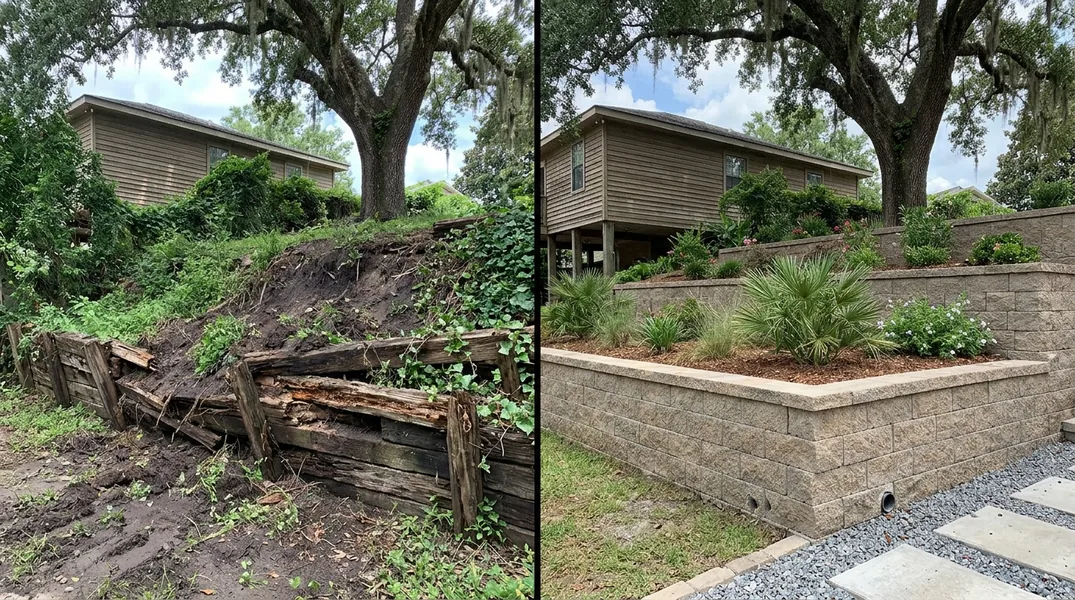
When homeowners search for retaining wall repair in New Orleans, they often hope for a quick patch. Unfortunately, cosmetic fixes rarely last on soft ground. The right approach starts with diagnosing why the wall is moving. In many cases, the original wall lacked proper drainage, was built on an inadequate footing, or was not designed for the soil conditions on the site. A bowing retaining wall fix might involve installing new drainage behind the wall, rebuilding the footing, or adding soil reinforcements such as geogrid. In more severe cases, the wall may need to be partially rebuilt or replaced entirely.
Working with a local contractor matters here because the solutions that work in other parts of the country often fail in Metairie and across the metro area. Local installers understand how deep footings need to go, what drainage systems perform well in our soil, and which materials hold up to our humidity and seasonal flooding. If you are unsure whether your wall can be repaired or should be replaced, a professional assessment can save you from spending money on a fix that will not hold. You can request a free estimate to get a clear picture of your options.
Retaining Wall Replacement Near Me: When Repair Is No Longer Enough
Sometimes the honest answer is that a wall has reached the end of its useful life. If a wall is severely leaning, has multiple wide cracks, or has already been repaired once and is moving again, replacement is often the more cost-effective long-term choice. This is especially true for older walls that were built without modern drainage or reinforcement. A new wall designed for local soil conditions can last for decades, while repeated repairs on a failing wall can add up to more than a replacement would have cost.
If you are searching for retaining wall replacement near me, look for a contractor who specializes in local conditions and can explain how they will address drainage, footing depth, and soil pressure. Retaining Wall Replacement is not just about tearing out the old wall and stacking new blocks. It is an opportunity to correct the underlying issues that caused the original wall to fail. In many cases, a properly engineered replacement wall will also improve the usability of your yard, whether you are terracing a slope, protecting a driveway, or creating a level area for outdoor living.
Choosing the Right Materials: Concrete Retaining Walls and Other Options
The material you choose has a big impact on how well your wall performs in New Orleans. Concrete Retaining Walls are a popular choice because they are heavy, durable, and resistant to rot and insect damage. Poured concrete walls can be engineered to handle significant soil pressure, and they perform well when properly reinforced and drained. Segmental block walls are another common option, and they offer flexibility and a more decorative look. However, block walls require careful installation, including proper base preparation and drainage, or they are prone to leaning and bowing.
Timber walls are generally not recommended for long-term use in our climate because they degrade quickly in wet soil. Regardless of material, the key is proper design and installation. That means a footing that extends below the active soil zone, a drainage system that moves water away from the wall, and backfill materials that do not trap water. A contractor who understands these details can help you choose a material that fits your budget and your property. If you are comparing options, ask about pricing and expected lifespan so you can make an informed decision.
Protecting Your Property: Maintenance Tips and When to Call a Professional
Once you have a sound retaining wall, a little maintenance goes a long way. Keep an eye on the drainage system, including weep holes and drain pipes, and make sure they are not clogged with soil or roots. Avoid planting large shrubs or trees too close to the wall, as roots can disrupt the soil and the wall structure. Watch for signs of erosion around the base and fill any depressions with compacted soil. After heavy rain, take a quick walk around your property and look for new cracks, tilting, or soil movement. Catching small issues early is the best way to avoid major repairs.
If you notice any of the warning signs discussed above, or if your wall is more than 15 to 20 years old, it is wise to have it inspected by a professional. Retaining Wall Repair is almost always less expensive than dealing with a collapsed wall or a damaged foundation. Whether you are in Kenner, Gretna, or anywhere in the metro area, New Orleans Retaining Wall can help you assess the condition of your wall and recommend the right solution. Call (504) 399-7980 to schedule a free estimate and get peace of mind before the next storm season.
Looking for a professional retaining wall contractor in New Orleans? New Orleans Retaining Wall responds fast for all your retaining wall needs.
Get a Free QuoteOur services: Retaining Wall Installation · Retaining Wall Repair · Retaining Wall Replacement